
"Can You Split Your Lot? SB 9 Rules for Santa Barbara, Montecito & Santa Ynez Valley — Coastal Zone, Fire Hazard & Owner-Occupancy Requirements Explained by Johannes Steenkamp, Realtor®"
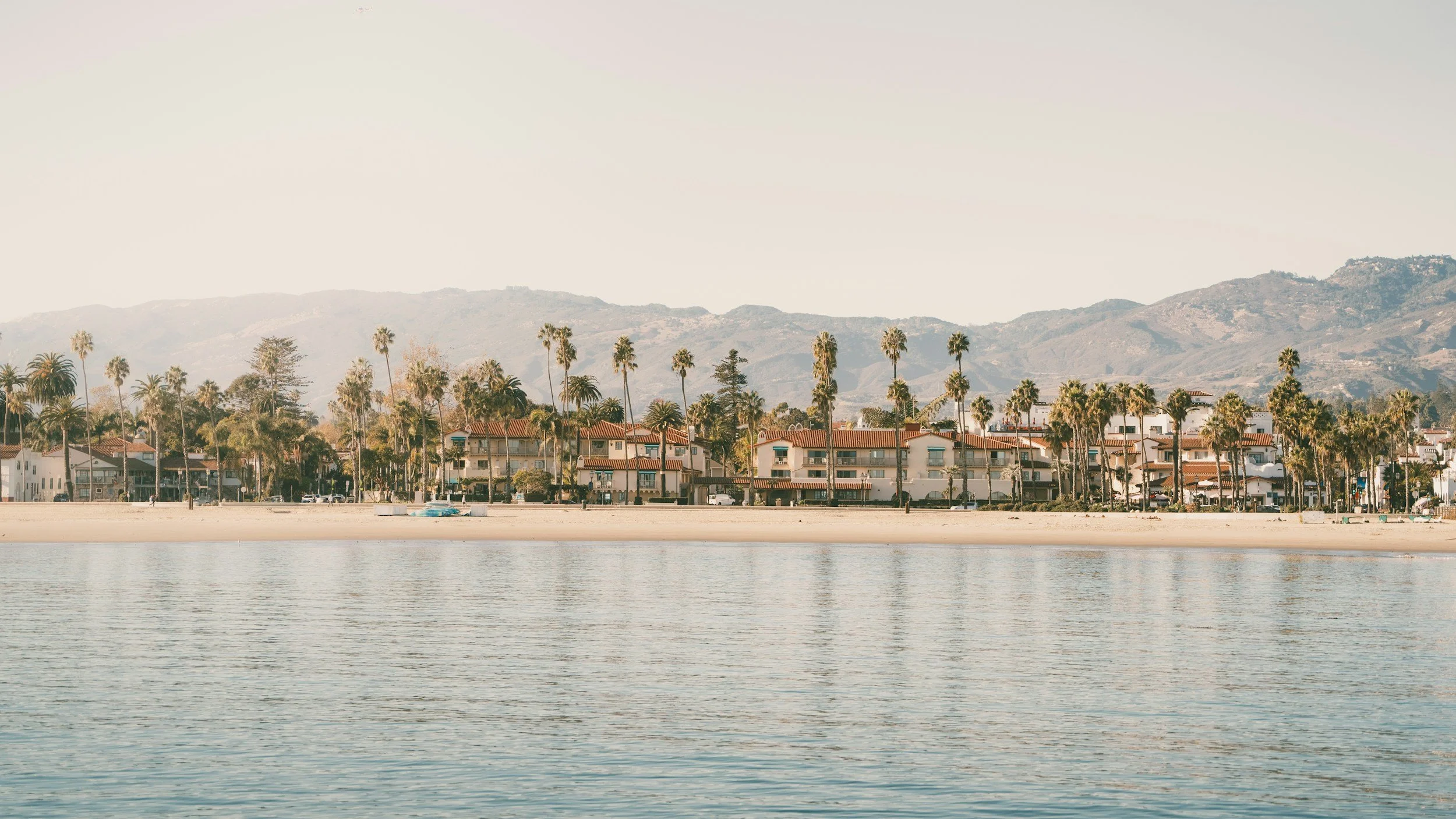
What California's SB 9 actually allows, where the coastal zone changes everything, and what it means for your property's value.
Last updated July 2, 2026
If you own a single-family home on the Central Coast, there's a decent chance you've heard some version of this: "You could split your lot and put another house on it." Since California's Senate Bill 9 (SB 9) took effect in January 2022, that idea has gone from rumor to real, legally available option for many homeowners — but "many" is doing a lot of work in that sentence. Santa Barbara's geography, coastal regulations, and fire-hazard zoning make this one of the more nuanced markets in the state to evaluate a lot split.
This guide walks through what a lot split actually is, the statewide rules under SB 9, and — more importantly — how the City of Santa Barbara, unincorporated Santa Barbara County (including Montecito), and the Santa Ynez Valley each apply and modify those rules locally.
Bottom line up front: SB 9 lets many single-family lots be split into two, with up to two housing units allowed on each resulting lot — up to four units total on what was originally one parcel. But large portions of the Santa Barbara area sit inside the California Coastal Zone or Very High Fire Hazard Severity Zones, both of which add extra layers of review or can disqualify a property entirely. Eligibility has to be checked parcel by parcel.
What Is a "Lot Split" Under California Law?
The lot split most people are referring to today is formally called an urban lot split, created by Government Code Section 66411.7 as part of SB 9. It allows an owner of a qualifying single-family zoned parcel to subdivide that one lot into two, through a streamlined "ministerial" process — meaning city or county staff approve it against objective, written standards rather than sending it through a discretionary hearing or environmental review.
Combined with SB 9's separate two-unit provision, the practical result is that a single-family lot can, in the right circumstances, end up supporting up to four units: two on each of the two new lots, in any mix of a primary home, a duplex, an accessory dwelling unit (ADU), or a junior ADU.
Statewide SB 9 Requirements
Before any local rules come into play, a property has to clear the baseline state-law criteria:
Zoning: The lot must be zoned for single-family residential use.
Location: The parcel must sit within an urbanized area or urban cluster, as defined by the U.S. Census Bureau.
Lot size after the split: Each resulting lot must be at least 1,200 square feet, and the split cannot create a lot smaller than 40% of the original parcel (commonly described as no more restrictive than a 60/40 division).
One split per lot, ever: A parcel that has already gone through an SB 9 urban lot split cannot be split again, and an owner generally cannot split two adjacent lots they own.
Owner-occupancy: The applicant must sign an affidavit affirming intent to live in one of the units on one of the new lots for at least three years after the split is recorded.
No displacement of existing housing: The split cannot require demolishing housing that's been rented in the past three years, rent-controlled or deed-restricted affordable housing, or units withdrawn from the rental market under the Ellis Act within the past 15 years.
Historic protections: Properties that are designated historic resources, contributing structures in a historic district, or listed on the State Historic Resources Inventory are excluded.
Environmentally sensitive and hazardous land: Wetlands, prime farmland, and other protected or hazardous categories defined in state law are excluded.
No short-term rentals: Units created through an SB 9 lot split cannot be rented for periods under 30 days.
Local agencies are allowed to apply objective zoning, subdivision, and design standards on top of these — access and easement requirements, for example — but they generally cannot impose standards that would physically prevent two 800-square-foot units from being built on each resulting lot, and they cannot require dedications of right-of-way or offsite improvements as a condition of the split.
Can You Split a Lot in the Santa Barbara Coastal Zone?
This is the piece that trips up a lot of Santa Barbara homeowners, because so much of the Central Coast — the Riviera, the Mesa, the Waterfront, much of Montecito, and stretches of the Gaviota Coast — sits inside the California Coastal Zone. SB 9 does not automatically apply the same way here.
In the City of Santa Barbara, urban lot splits and two-unit development are limited to specific single-family zones — R-1, and in the Coastal Zone, the A, E, and R-1 districts — and don't apply at all in R-2, multi-unit, office, commercial, or manufacturing zones. Within the Coastal Zone specifically, the city's Local Coastal Land Use Plan can require a minimum lot size for an urban lot split that is twice the standard minimum lot size that would otherwise apply — a meaningful hurdle on smaller coastal parcels. Development along the Coastal Bluff Edge and its buffer is also restricted, and Coastal Development Permit requirements layer on top of the SB 9 process for properties within the Coastal Zone boundary.
In unincorporated areas of Santa Barbara County — including much of Montecito — SB 9 lot splits are exempt from the county's Growth Management Ordinance, which otherwise caps the pace of new home construction in the Montecito Planning Area. That's a significant carve-out, but it doesn't remove the coastal zone, fire hazard, and historic-resource screens that still apply. In practice, this means a Montecito lot split is evaluated on the same three questions as anywhere else on the Central Coast: is it in the Coastal Zone, is it in a Very High Fire Hazard Severity Zone, and does the resulting lot size clear the local minimum.
Does a Very High Fire Hazard Zone Disqualify My Lot Split?
Much of the Santa Barbara foothills, the Santa Ynez Valley, and parts of Montecito fall within Very High Fire Hazard Severity Zones as mapped by CAL FIRE. Properties in these zones are generally excluded from SB 9 unless all new and existing structures on the resulting lots comply with applicable fire-hazard building standards — which typically means fire sprinklers, non-combustible construction elements, and restrictions like no tandem parking. This is a threshold issue worth checking early, before any architectural investment.
Local Rules That Add to the State Baseline
RequirementWhat It Means LocallyAffordable unitThe City of Santa Barbara requires at least one unit on a two-unit development or lot split to be offered for sale or rent at moderate, low, or very-low income levels — with Coastal Zone units restricted to low-income affordability specifically.ParkingGenerally one off-street parking space per unit, unless the property is within a half-mile of a qualifying transit corridor or stop.UtilitiesEach newly created parcel typically must have its own separate water meter and sewer connection.AccessEach lot must front a public street or be served by a qualifying access easement — flag lots and alley-only access are generally not permitted.SetbacksA uniform four-foot side and rear setback applies statewide as the ceiling; local agencies may allow less but not more.
What This Means If You're Thinking About Selling — or Buying
For sellers, a lot that qualifies for an SB 9 split can be a genuine value driver, particularly on the Central Coast where land itself carries most of the value. But it cuts both ways: I've seen listings marketed as "SB 9 eligible" that turn out to sit in the Coastal Zone with a doubled minimum-lot-size requirement, or inside a Very High Fire Hazard Severity Zone, which can make the split impractical or impossible. Overstating eligibility creates disclosure risk and frustrated buyers down the line.
For buyers evaluating a property specifically for its split potential, the eligibility screen needs to happen before you write an offer contingent only on standard inspections — zoning, coastal zone status, fire hazard designation, lot size, HOA covenants (CC&Rs can independently block a split even where state law would allow it), and any history of prior splits or rental occupancy all factor in.
Fire hazard designation is worth cross-checking against defensible space and insurance requirements too — see my guide to wildfire prevention, insurance discounts, and defensible space rules in Santa Barbara County for how those overlapping zones affect both eligibility and ongoing ownership costs. And if you're weighing the sale timeline around a potential split, my recent breakdown of Santa Barbara County market conditions has useful context on how land value is trending across neighborhoods right now.
If you're weighing either side of this, I'm happy to run a preliminary eligibility check on a specific parcel — zoning, coastal status, and fire zone — as part of a broader conversation about what the property is worth with and without that potential.
Frequently Asked Questions
What is the difference between an SB 9 lot split and building an ADU?
An ADU (accessory dwelling unit) is a secondary unit added to an existing lot without subdividing the property — the lot stays intact and under one ownership. An SB 9 urban lot split physically divides one parcel into two separate legal lots, each of which can then be sold, financed, and developed independently.
Is my property in Santa Barbara automatically eligible for a lot split?
No. Eligibility depends on zoning, whether the parcel is in the Coastal Zone, whether it falls in a Very High Fire Hazard Severity Zone, lot size, rental and historic-designation history, and local objective standards adopted by the city or county. Each of these needs to be checked against the specific parcel.
Do I have to live in one of the new units after a lot split?
Yes. State law requires the applicant to sign an affidavit committing to live in one of the units on one of the newly created lots for at least three years following the split.
Can I split a lot and then sell both halves right away?
Not immediately. The three-year owner-occupancy requirement applies to at least one of the resulting units. This is a key reason SB 9 is generally better suited to homeowners with a longer-term plan than to short-term investors.
Does an HOA override SB 9?
Homeowners association covenants, conditions, and restrictions (CC&Rs) can independently prohibit subdivision or additional units regardless of what state law allows. A property inside an HOA needs its governing documents reviewed alongside the zoning and coastal analysis.
How many units can end up on a lot after an SB 9 split?
Up to two units per resulting lot — so up to four units total across both new lots, in any combination of a primary residence, duplex, ADU, or junior ADU, subject to a cap of four units overall.
Does the Coastal Zone block lot splits entirely?
Not entirely, but it adds requirements. In the City of Santa Barbara's Coastal Zone, for example, the minimum lot size for an urban lot split can be double the standard minimum, and a separate Coastal Development Permit process applies on top of the SB 9 review.
This article summarizes California Senate Bill 9 (Government Code Section 66411.7) and locally adopted implementing ordinances for general informational purposes. Zoning designations, coastal boundaries, fire hazard maps, and municipal codes change, and eligibility must be verified against your specific parcel with the applicable city or county planning department. This is not legal advice — consult a land use attorney or licensed surveyor for a definitive eligibility determination before making development or purchase decisions.
Wondering If Your Property Qualifies?
I can run a preliminary zoning, coastal zone, and fire hazard screen on your Central Coast property and talk through what a potential lot split could mean for its value.
Johannes Steenkamp, Realtor® SFR, SRES · Keller Williams Realty
CalDRE# 02057072
(805) 886-6581 · jsteenkamp@kw.com · www.johannessteenkamp.com
Serving Santa Barbara · Montecito · Santa Ynez Valley.